
"Powering Canada Strong:" Advancing Affordability, Reliability, Decarbonization and Sustainability?

The past few weeks have seen a remarkable ‘flooding of the zone’ with announcements from the federal government related to energy, climate and the environment. The key elements included:
·Proposals to further ‘streamline’ federal environmental and safety approvals, principally around natural resource extraction and export projects, as well as nuclear energy.
·The announcement of an implementation agreement for the November 2025 Energy and Environment Memorandum of Understanding (MOU) with Danielle Smith’s Alberta government.
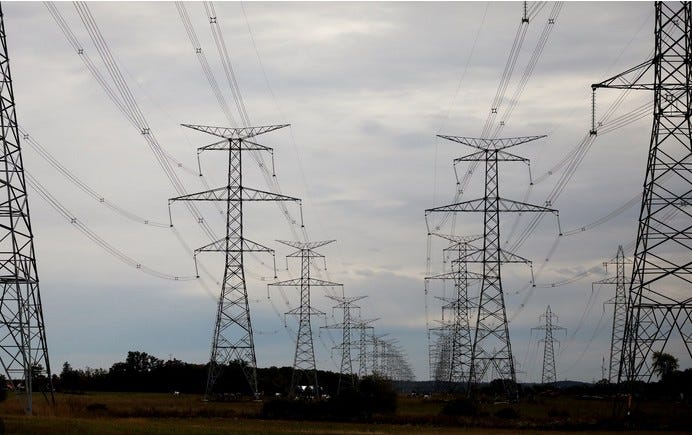
A national electricity strategy, with a stated focus on clean, affordable, and reliable electricity supplies was released.
The proposals around accelerated approvals for major projects, and the Canada-Alberta MOU Implementation Agreement have drawn considerable attention. Much of the reaction has been critical from the perspectives of climate change, the integrity and transparency of environmental decision-making and the prospects for reconciliation with Indigenous Peoples.
The electricity strategy has drawn less attention, but it is important not to overlook its own implications for energy affordability and security and climate change.
Electricity and Decarbonization
In a climate context , the electricity sector has drawn attention as a major source of GHG emissions itself, and as a potential contributor to GHG emission reductions in other sectors, like industry, transportation and space heating, through electrification. Analyses have suggested that Canada’s achievement of a net zero emission target by 2050 through electrification could require a two-to-three-fold increase in electricity generation by mid-century. Addition growth in demand is projected from new industries as well, particularly Artificial Intelligence (AI) data centres.
It is into this context that the government’s May 14th strategy was delivered. The plan includes some important elements related to energy efficiency and productivity, and the strengthening of east-west grid connections. However, its overwhelming focus for meeting the projected growth in electricity demand is on fossil gas-fired generation and nuclear energy. The accelerating global movement in the direction of renewable energy is mostly overlooked.
Implications of a gas and nuclear focus for climate and energy security
The reconciliation of this technological focus with the strategy’s stated goals of providing clean, affordable and reliable electricity presents some major challenges. Fossil gas-fired generation is already the source of major growth in electricity related emissions. This is particularly the case in Ontario, where emissions from gas-fired generation have at least quintupled since 2017, and are projected to continue to rise well into the 2030s. There are proposals for major additional gas-fired generation from New Brunswick to British Columbia. The strategy hints at a further weakening of the Clean Electricity Regulations, currently intended to achieve a net zero electricity sector by 2050.
Nuclear energy, for its part, continues to be subject to enormous capital costs and construction delays as ever. Long-standing issues around waste management throughout the nuclear fuel cycle remain unresolved. The global scale safety, security and weapons proliferation risks associated with nuclear power have been highlighted by the wars in Iran and Ukraine. Reliability will be challenged by reactor choices that will be ‘first of kind’ -never built or operated before in Canada, and in some cases, globally.
Both of the core technological choices in the strategy raise serious energy security questions as well. Canada is increasingly reliant on ‘fracked’ fossil gas from the United States for electricity generation. The current proposals for new nuclear reactors seem, unlike the existing CANDU reactors in Ontario and New Brunswick, almost certain to require enriched uranium fuel, which is not produced in Canada. It will have to come from the United States as well.
Costs, Financing and Competitiveness
The plan suggests the cost of its implementation are likely to be in the range of hundreds of billions of dollars, but it is even less clear on how it would be financed, or its impacts on electricity costs. Ontario’s heavily nuclear and gas dependent electricity strategy is already raising alarm over its potential impact on electricity bills, and the implications of those costs for competitiveness, affordability and decarbonization through electrification.
Underlying the plan seems to be an assumption that Canada has a comparative advantage in terms of its ability to provide large volumes of low-cost electricity. Unfortunately, that is a view very much rooted in past, not the future.
Historically, some parts of Canada have had comparative advantages in electricity supply and costs due to availability of readily accessible large-scale hydroelectric resources. The experiences of Ontario, Quebec, BC, Manitoba, and Labrador are prominent in this regard. Power from Niagara Falls for example, provided the basis for industrialization around the western end of Lake Ontario in the first half of the 20th Century.
The situation going forward is more complicated. The supply of readily developable large hydro-electric sites in Canada is mostly exhausted. The experiences with the Site C development in BC and Muskrat Falls project in Labrador, have highlighted the economic, technological, environmental and political risks associated with new large hydro projects.
Paths Towards Decarbonization, Affordability, and Sustainability
The implication is that future expansions of electricity supply will come from technologies where Canada has no inherent comparative advantage - gas and nuclear as suggested in the federal strategy, or non-large hydro renewable energy sources, like wind and solar. There policy instability has left Canada falling behind the global trajectory of accelerating expansion.
The situation suggests two important areas of focus. The first, in the absence of obvious cost advantages, will be to control energy costs through the maximization of energy efficiency and productivity. Secondly, on the supply side, although largely overlooked in the federal plan, non-large hydro renewables offer the best option for capacity expansion given their low costs, operational and planning flexibility, scalability, relatively short planning and construction timeframes, wide range of commercially proven and available technologies, low GHG and broader environmental impacts, and avoidance of the geopolitical and cost risks associated with dependency on out-of-country fuel supply chains. These were the rationales driving renewables development globally even before the US-Israel-Iran War.
Large scale deployment of renewables will require making optimal use of new and existing energy storage capacity, regional interties and grid management technologies. Meeting critical winter peaks will remain a challenge in parts of the country subject to sustained overnight temperatures below in the mid –20s. But an electricity strategy rooted in energy productivity, and renewable energy expansion remains Canada’s best option for decarbonization, affordability, competitiveness and sustainability.